
I had always wanted to visit the Faroe Islands. The wind-battered collection of little islands, perched in the north Atlantic, somewhere between Iceland, Norway and the UK is like nowhere else, and I count myself very fortunate to have had the opportunity.
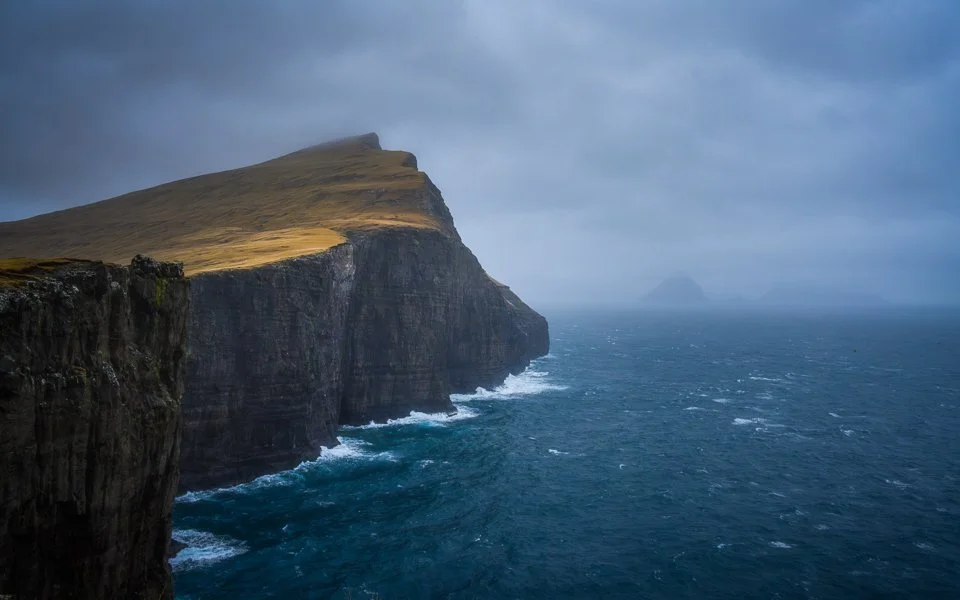
The southern cliffs of Vágar, Faroe Islands
In January 2024, I turned 50 years of age, and as a surprise birthday gift, my wife bought me a 6-day trip to this amazing archipelago. Most visitors to the Faroe Islands make their journey in the summer months, when the days are long. Whilst the weather there is always wild and uncertain, the summer months at least give a slightly greater chance of stable conditions. Visiting in January is less common, and so we were not surprised to experience some of the wildest and most dramatic conditions imaginable - intense rain, strong winds and heavy snow... but also amazing light!
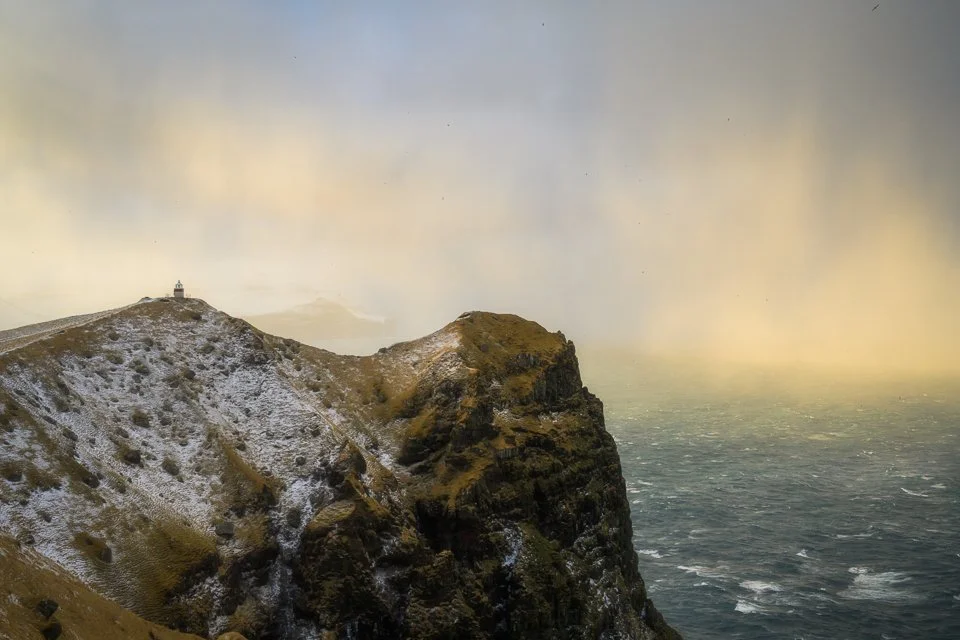
Kallur Lighthouse on Kelsoy - a popular destination for tourists and photographers, but there wasn’t a soul there
The other advantage about travelling in winter is the peace. We had many places completely to ourselves which was a magical experience. As well as the lack of tourists, there was also a strange absence of locals. We got chatting to a Faroese lady one morning in a cafe who told us that a significant portion of the population were currently in Germany for the 2024 European Men's Handball Championship! Apparently the Faroese are mad for handball and so a big cohort of supporters had left the islands to cheer on their team. We dutifully found ourselves in a pub one evening, watching our first ever handball match. It’s amazing how a new sport become instantly fascinating when you’re with locals in a new place who are obsessed with it!
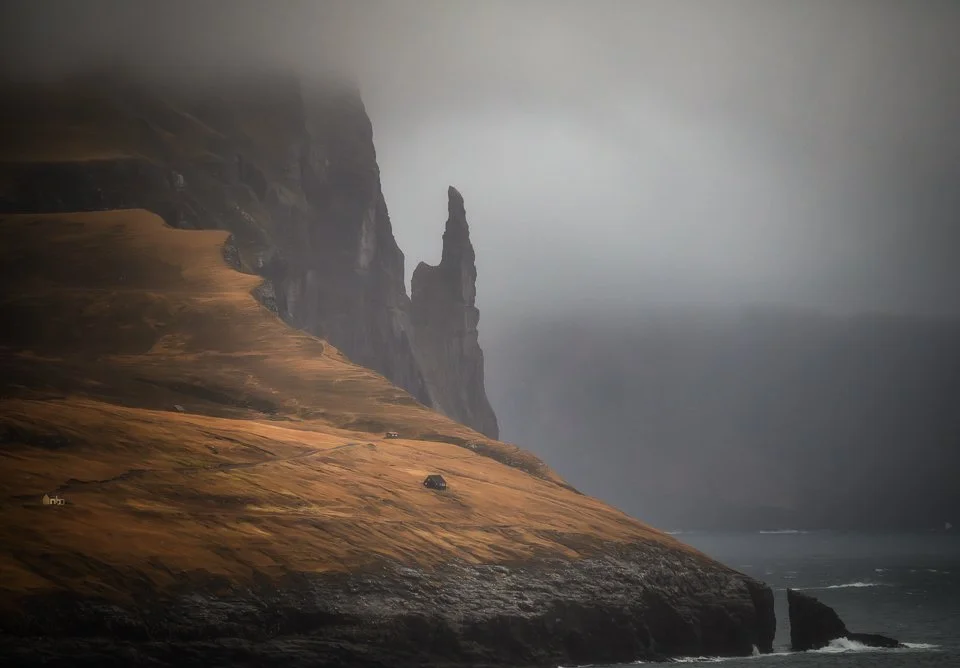
Insane sea-stacks and seas near to Trælanípa
Over the years, I’ve spent quite a lot of time in Iceland, and the Faroe Islands remind me of my visits there.
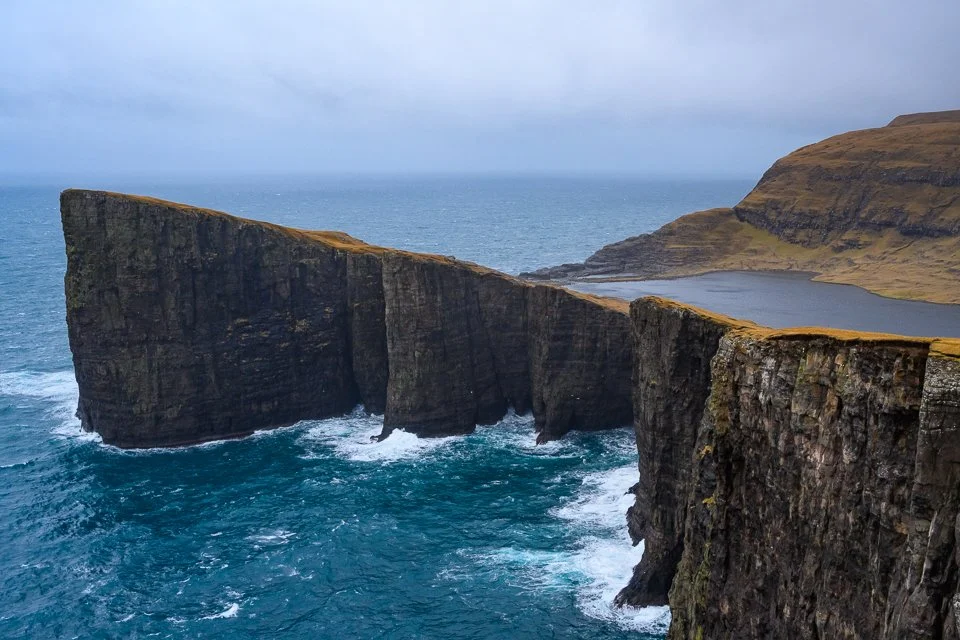
Trælanípa (Slave Cliff) and Lake Leitisvatn
Unlike Iceland, there are no volcanoes or glaciers yet there is something about the landscape here that really reminds me of the ‘land of fire and ice’. However, there’s something about the Faroes which feels (to me at least) even more dramatic.
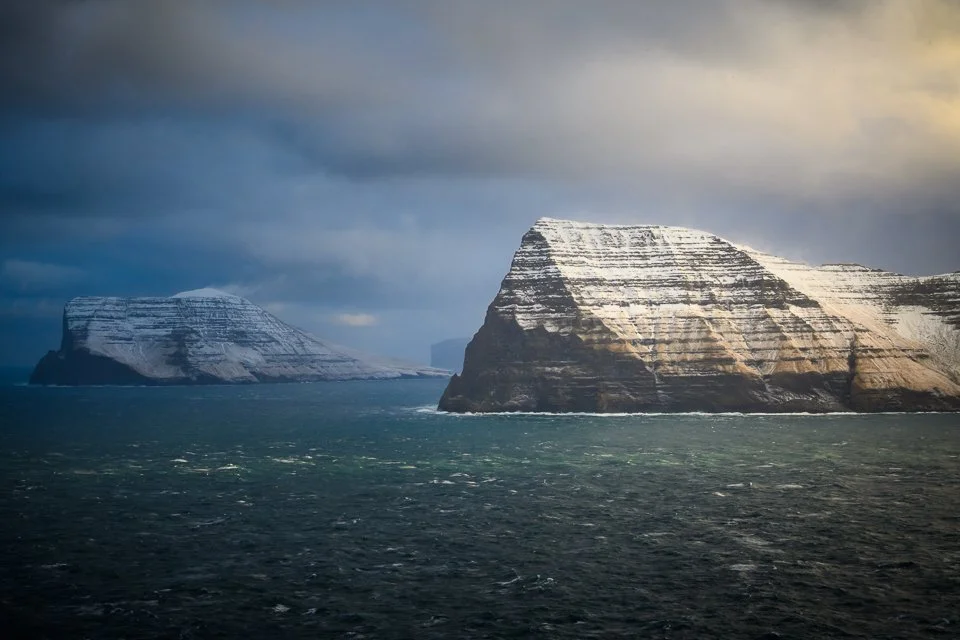
Kunoy and Bordoy, from Kelsoy
On one memorable day, we drove and then took a ferry to the small slender island of Kalsoy (population just 76). On disembarking from the little ferry amidst fairly heavy snow and winds, we were reassured by the boat’s captain that it would indeed be sailing later on that day. I guess the anxious looks on our faces betrayed our anxiety about getting stuck here. Duly reassured we thus gingerly headed north along the 18km-long island (it’s only 1-2 km wide over much of its span) to the northern tip. We were blown away by how beautiful it was - made all the special by the fact there was nobody but us there.
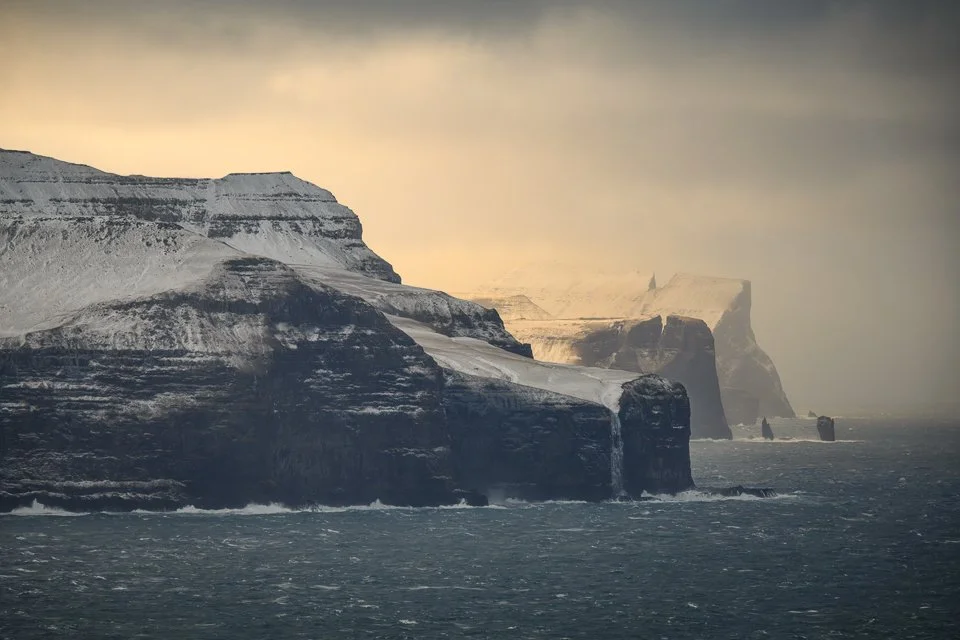
From the northern tip of Kelsoy
Kelsoy is also home to one of the most spectacularly-positioned statues I have ever seen - ‘The Seal Woman’ (Kópakonan). This sits at the base of some steps in the tiny village of Mikladalur. Watching the waves crash around it is a sight to behold.
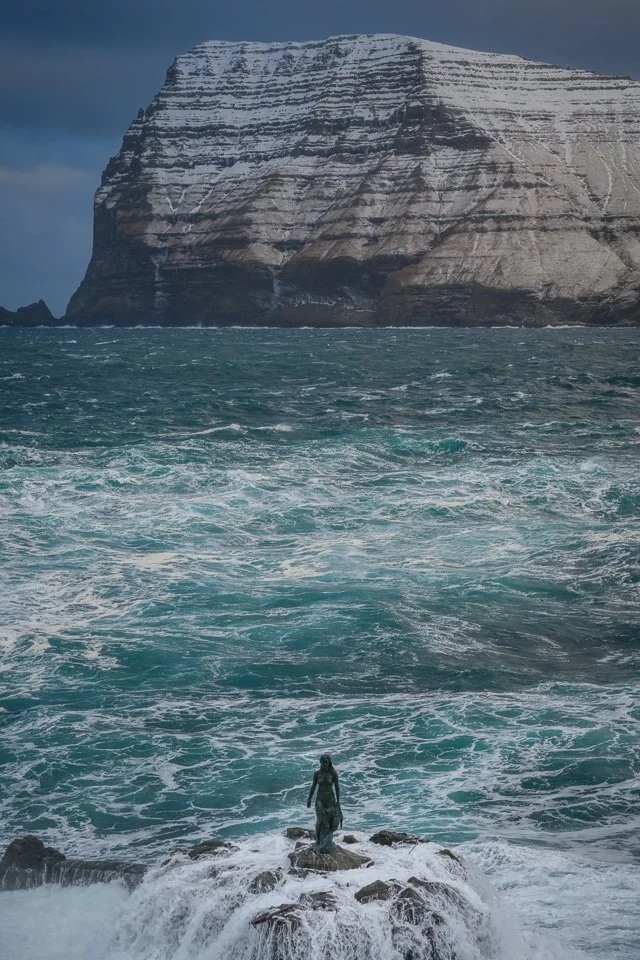
‘The Seal Woman’ (Kópakonan)
Two other must-see spots on the Faroes are the grass-rooved houses of Saksun (on Streymoy) and the Múlafossur Waterfall near the secluded settlement of Gásadalur on Vagar Island. I’ve seen the latter described as ‘easily the most famous attraction in the Faroe Islands‘, but again, we had it to ourselves. The weather here was utterly wild and the driving rain (whilst trying to make images) was not helpful. However, I was reasonably pleased with what I managed to produce under such challenging conditions.
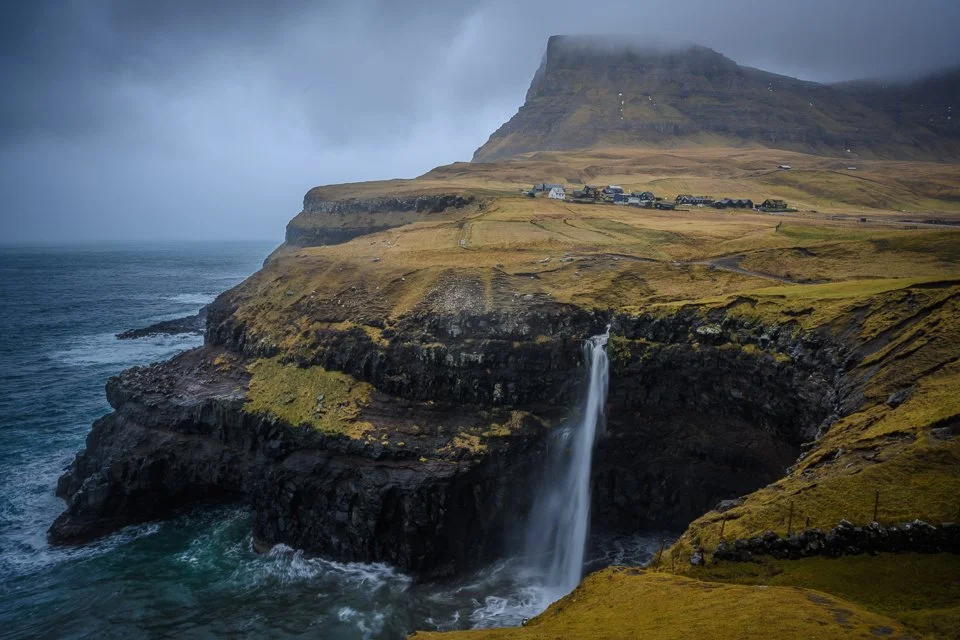
Múlafossur Waterfall with the settlement of Gásadalur perched above it
On Streymoy island, home to the village of Saksun, we did spot three other tourists, but other than that, it was ours to enjoly alone.
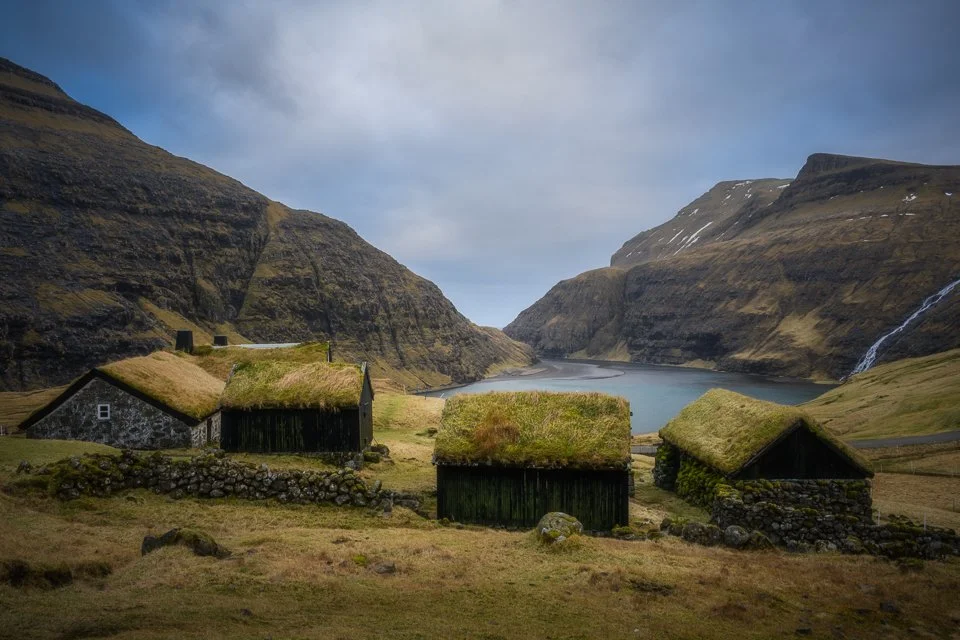
The gass-covered houses of Saksun
As you might see from the way I’m writing, I loved visiting the Faroes, and doing so at such a quiet and wild time of the year was really special. I’m very keen to go back, and there’s a part of me that would love to see it in the vibrant colours of spring and summer. However, the cold, wet, windy weather and the quiet of that January trip had a real impact on me, and I wonder whether my next trip there might be at exactly the same time. To anyone interested, I would say: go. You won’t be disappointed.